Followers

Sunday, September 25, 2011

Skippy Dies by Paul Murray - Reviewed by Gary Carden


Skippy Dies by Paul Murray
New York: Faber and Faber, Inc.
$16.00 (paperback) 661 pages

There is another world, but it is in this one.
- Paul Elaurd

Kind Hearts, this is an astonishing book. Frankly, I never would have read this one, if I had not blundered on a comment by Donna Tartt (my pick for our greatest living Southern writer). Recently, when a book store owner in Greenwood, Mississippi asked her if she had a favorite book, Donna immediately announced that Skippy Dies was definitely the “book of the year.” That is good enough for me. I immediately launched an internet search and scored a used paperback copy. I advise you to do the same.

The setting of Skippy Dies is Seabrook College, the home of some four hundred male students (average age is 14) in Dublin, Ireland. Operated by the Catholic church, the college exudes tradition and moral rectitude - the kind of atmosphere that is highly valued by upwardly mobile, middle-class parents who are eager to pass on the irksome job of raising sons to a Seabrook’s motley crew of teachers who run the gamut from merely incompetent to disturbingly neurotic. It is probably evasive to say that the students are just average fourteen-year- olds, so to be more specific, they are: lonely, horny, angry, devious, naive and confused. Often, they can embody contradictory emotions ... such as fragile egos and a surprising penchant for cruelty and violence.

Author, Paul Murray gets his novel off to a provocative start by killing his protagonist, Skippy (Danny Juster) on the first page. Skippy expires while his room-mate, Ruprucht Van Doren is gorging himself on doughnuts (Ruprucht holds the record for the greatest number of doughnuts consumed at a single sitting). The two boys are in the college hangout, Ed’s Doughnut Shop, where a large number of students watch Skippy twitch and convulse as he struggles to write a farewell message to his girlfriend, Lori. (He is using a puddle of syrup on the floor and slowly writes “Tell Lori.....” and then dies). The rest of this hefty novel consists of a 600-page flashback that relates how poor Skippy came to be lying on the floor surrounded by soggy doughnuts and blobs of blueberry syrup.

Seabrook College easily qualifies as a microcosm of the world. The student body is racially diverse, consisting of significant numbers of Afro-Americans, Irish, Japanese, Italian, French and Chinese students who share a common dilemma. They are all homesick. In addition, they have all brought their problems and talents to Seabrook. Skippy swims, but is asthmatic; Ruprucht is the school genius who holds court in his own computer lab in the basement. Although many excel at rugby or music, the bond that binds them is not scholastic. For most of them, it is the shameful knowledge that they have been abandoned at Seabrook like unclaimed luggage. Their parents have paid the excessive tuition in the belief that if their sons are safe and well-fed, the parents can get on with their social life and their careers without feeling guilty about the fact that they rarely visit the school and are often reluctant to have their sons home for the holidays.

Drugs are everywhere, thanks to a steady supply provided by two students, Carl and Barrie (who are locals who do not live in the college dorms), the majority of the students are under the influence of either diet pills, pot, Ritalin or ecstasy, and yes, due to the existence of an all-girl school nearby (Saint Bridget’s), there are opportunities for chaperoned dances. (One of the most bizarre and comical episodes in this novel occurs at the Halloween Dance where a combination of rap music, drugs, a power failure and a lack of supervision....where are the chaperones?... produces a kind of masquerade/pubescent orgy).

Most of the faculty and administration at Seabrook are asleep at the wheel. The Acting Principal, Greg Costigan (known as the Automator to the students) is a pompous, arrogant windbag who is totally inept and spends most of his time writing florid speeches about the school’s traditions and terrorizing the demoralized faculty. Father Green, the French teacher, is an ancient pedophile (the students call him Pere Vert) works diligently with the Dublin poor ... possibly as pertinence for a shameful past in Africa. The history teacher is known as Howard, the Coward (due to a mysterious incident when he was a Seabrook student himself) struggles to deal with his own infidelity and his determination to be a competent teacher. Father Slattery, the English teacher, is slowly losing his struggle with age and memory and teaches a few of Robert Frost’s poems over and over. Tom Roche has been crippled by an accident (the same accident that made poor Howard ... the Coward!) and nurses a secret that is destroying him. In summary, these tortured, comical, tragic and sometimes gifted educators are trapped within the confines of Seabrook in much the same manner as their students. Some of them yearn to escape but lack the courage to leave.

Skippy Dies manages to run the gamut from comical farce to a kind of dark medication on anguish of being young and alone. Skippy Dies is by turns comical, ribald and heartbreaking). Some of the most hilarious passages involve the students’ obsession with sex ....like Dennis who things that Frost’s poem, “The Road not Taken” is about anal sex.) As each tragi-comic episode unfolds, poor inept Skippy dreams that his parents (who never visit) will take him home. He views the world around him with anxiety and searches for a safe haven . When he blunders into a relationship with the jaded and self-centered Lori from Saint Bridgets, he quickly becomes a pawn manipulated by a shallow and morally corrupt girl. Stalked by Carl (Lori’s true love), haunted by vague memories of sexual abuse, .terrified by Father Green, badgered by his swimming coach and his father who urges him to “be all he can be” in an impending swimming meet, poor Skippy desperately searches for an escape....which are provided by the pills under his pillow.

For a while, it appears that fat Ruprucht, Skippy’s room-mate, has the answer to all of the dreams and hopes of his fellow students. In his basement lab Ruprucht works tirelessly, constructing marvelous machines that will provide an access to “other dimensions” (Ruprucht’s research has lead him to believe that there are eleven). Under the hopeful eyes of his fellow students, this pudgy wizard promises them paradise in another dimension. As the experiments become more bizarre, finally requiring that Rupert relocate their “experiment” to the laundry room of Saint Bridgets, the students’ faith in Ruprucht begins to falter. Is he a fraud? If so, what will they do? If he is rejected, what will become of Ruprucht?

It is easy to see why Donna Tartt loves Skippy Dies since her own novel, The Secret Society, concerns a private school and the anguished lives of its students. Both novels demonstrate a heartfelt insight into the anguish of being young.

Friday, September 9, 2011

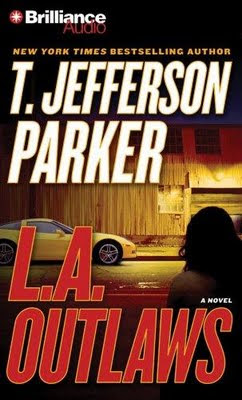
L. A. Outlaws by T. Jefferson Parker - Reviewed by Gary Carden


L. A. Outlaws by T. Jefferson Parker
New York: Dutton
$25.95 - 371 pages

If you are one of those readers who has a grudging respect for outlaws, and if you find yourself sometimes fantasizing about putting on a mask, stealing a fast car - say, a Corvette 706 with 505 horses under the hood - and roaring through the night into some abandoned warehouse where a scummy bunch of crooks are dividing up their spoils (stolen diamonds, drug deal profits, etc.); if you dream of firing a couple of warning shots from your trusty pistol, scooping up all of that money/contraband and then speeding away into the night ... Well, dear readers, T. Jefferson Parker’s L. A. Outlaws is the book for you!

This fast-paced crime fiction opus is designed to give the reader a delicious, forbidden thrill as we speed through the dark underbelly of Los Angeles with Allison Murietta, the sensual, dangerous great, great, great, great, great, great granddaughter of the legendary outlaw, Joaquin Murietta. Joaquin was hunted down, murdered and beheaded in 1853 and his head was once exhibited floating in a jar of alcohol in California sideshows. However,his descendant, Allison Murietta has become something of a celebrity. She robs KFCs, Starbucks, Taco Bells, Burger Kings, Radio Shack, Payless Shoes and Dennys - chains that Allison calls “poverty boxes” because they exploit their employees (Allison has worked in those places). She always leaves a business card, “You have been robbed by Allison Murietta, Have a Good Day!” before she strides through the exit,brandishing her derringer, Canonita (a kind of small, modified shotgun that has no accuracy after ten feet). Invariably, Allison gives the money to charities. (Well, most of it!)

Now, for a bit of unadorned fact. Alllison Murietta is actually a 32-year-old prize-winning schoolteacher named Suzanne Jones. Although she has a lifestyle that is totally out of sync with a teacher’s salary, she manages to maintain her wild adventure (she is a gifted car thief), while living with her husband (her third) and three sons on a large California ranch. She readily admits that she is unstable, shockingly carnal and has a tenuous grasp of reality. In effect, she seems to know that her criminal career is probably going to end with her in a shootout and dying on the floor of a Dennys. In the meanwhile, she expects to enjoy the best - wine, sex, expensive clothes, cars and thrills. She often observes that she is never more alive than when she is waving Canonita in the faces of terrified employes and awe-struck customers. Eventually, her audience starts clapping and the security camera film in the robbed stores starts to show up on TV. Allison loves the camera and often poses with the manager of the store she has just robbed.

However, what really makes L. A. Outlaws purr and shimmy like a stock car at the Indianapolis 500, is T. Jefferson Parker’s talent for developing tension and character. Especially noteworthy are two remarkable men, a cop and a killer. Both are destined to affect the destiny of Allison Murietta. Lupercio Maygar, a bandy-legged, little Salvadorian assassin will make your skin crawl. Born in the slums of El Salvador, Lupercio survived by learning to be “unremarkable.” After he finds both his brother and his father in the pile of dead bodies that are dumped each night in a landfill, Maygar migrated to L. A. where he quickly became involved in the vicious drug wars - an assassin for hire. His weapon of choice is a machete (which, like Alllison’s derringer, has been “reconditioned” to house a shotgun in the handle. Even after murdering twelve gang members, Maygar is never arrested due to the fact that there are no witnesses to his crimes.

At the other end of the spectrum is Charlie Hood, a patrolman who is troubled by his dreams of a slaughter that he witnessed in Iraq. Now that he is back in L. A., he is struggling to create a purpose for living and since he finds himself surrounded by corrupt law officials and burgeoning violence, he is beginning to lose faith in what he is doing ... until the night that he stops a speeding Corvette and meets Suzanne Jones who gives new meaning to the term, “flirt.” The next day, he learns that bloody massacre has occurred in an automobile repair shop near the place where he stopped Suzanne.

The reason that Suzanne is “out and about” that night is that her “other self,” Allison Murietta has picked up on a rumor of a big diamond heist - the spoils of which are about to change hands in an auto repair shop. Not content with the modest sums that she gets in the chain stores and fast-food joints, Allison dreams of making the big steal - a half million or so in uncut diamonds. However, when she arrives at the auto shop, prepared to fire a warning shot into the air, demand the stolen goods and speed away, she gets a shock: the shop contains ten heavily armed (but dead) men .... a shootout and no survivors. When she finds the diamond in a back pack, she thinks her dream has come true. When she hears footsteps, she hides and watches a small man with a machete move silently through the building and vanish. The diamonds will buy her the comfort and security that she needs to spend the rest of her life ... nurturing her three sons and pursuing sensual pleasures. When the midget with the machete is gone, she stashes the diamonds in her Corvette and speeds away - only to meet Patrolman Charlie Hood a few miles down the road.

Events have been exciting up until now, but it is time for the terror and tension to begin.The reader eventually learns that the local crime lord has dispatched Lupercio Magar to pick up a shipment of stolen diamonds from a jewelry store owner. Magar arrives to find the same bloody massacre. Someone has been there before him and they left with the diamonds. Lupercio gets in his cherished 1973 Lincoln and begins cruising the surrounding roads where he eventually finds ...one highway patrolman, a feisty woman and a Corvette. Of course, he drives on, but Suzanne and Lupercio have seen each other now.

Eventually, Lupercio figures it out. Allison Murietta/Suzanne Jones has the diamonds, but worse than that, she saw him when he passed silently through the murder scene. No one has seen Lupercio and his machete and lived. This woman must die. For those of you have seen Javier Bardem as the relentless murderer in “No Country for Old Men,” be assured that there is something that is as inexorable in the tiny killer, Lupercio Magar.

Aside from the teeth-gritting tension in L.A. Outlaws, this novel is also filled with a lot of hot breath and passion. Yes, Charlie Hood and Suzanne Jones can’t keep their hands off each other. Of course, Charlie suspects Suzanne’s “real identity,” but each time he decides to do something about it, he finds himself keeping another rendezvous. Suzanne/Allison is paranoid and feels that Charlie is about to betray her. All of this guilt and paranoia seems to merely add more zest to the sex.

T. Jefferson Parker is good. For readers who love crime/suspense novels, they don’t get any better than L. A. Outlaws. Mind you, now, this is not great literature - this is fun.

Flashback by Dan Simmons - Reviewed by Gary Carden


Flashback by Dan Simmons
New York: Little, Brown and Company
$27.99 - 553 pages 2011

Well, Kind Hearts, I am a major Dan Simmons fan, but I had some reservations about signing on for this multi-layered, post-apocalyptic novel about life in the USA following The Day It All Hit the Fan. To tell you the truth, reading Flashback has been a hard jog down a rocky road. Simmons has never been a sunshine and roses author as those of you who read (and loved) The Terror and Drood well know. However, this time out, the author’s grim and daunting worldview plumbs deeply into the lower depths of human nature.

A devastating Islamic nuclear attack has reduced America’s major cities to radioactive rubble, and a brutal invasion quickly divides most of the Midwest and the western coast into isolated fiefdoms controlled by Muslims and Japanese warlords; Texas becomes an independent country with its own flag, militia and constitution; Mexico decides to “reclaim” all of the land that had been taken from them and begins an aggressive invasion of New Mexico and the adjoining states. Surviving Midwestern Jews are herded into a sprawling camp known as “Six Flags Over the Jews” (on the site of an old theme park) and a terrifying jihad destroys Israel and six million inhabitants. American military forces are retrained by Japan as mercenaries and sent to fight in a protracted war in China.

All of these radical changes are merely some twenty years in the future. However, even the most surreal conditions described by Simmons are the projected outcome of conditions that have their roots in 20011. In case you are wondering, the economy does not recover and Medicare bottoms out. Simmons’ characters deliver harangues about how the world’s greatest superpower was brought down by a combination of governmental incompetence and public apathy. Right-wing radio programs are filled with hysterical rants; drug-crazed teenagers vandalize and rob and America’sresources are being harvested by foreign powers. We have gone to hell. In fact, the Southeastern U. S. doesn’t even exist anymore - it is never mentioned in Flashback! (Perhaps it is a barbaric land filled with degenerate hillbillies.)

Up to this point, I have neglected to mention the significance of the title. Flashback is the name of drug to which 80% of the population is addicted. Although the drug is illegal, it is both cheap and available. In fact, there is evidence that suggests that major world powers will see to it that nothing interferes with the distribution of a drug that keeps the major part of America’s population dozing in thousands of flashback caves where they relive the past. Under the influence of flashback an addict can vividly experience the birth of a child that is long dead, honeymoons, athletic accomplishments and memorable/triumphant events - any action in which the addict felt vividly alive. Under the influence of flashback, death can be defeated ... for an hour or two.

The protagonist of Flashback is Nick Bottoms, an ex-cop living in an abandoned shopping mall in Denver. Nick, who occasionally encounters people who comment on the connection between his name and Nicolas Bottom, the weaver (and ass) in “A Midsummer Night’s Dream” - this Nick has lost it all: Dara, his beautiful wife who died in a freakish car accident; Val, a son that he has abandoned (the embittered Val lives with his grandfather); a promising career as a detective ... and, yes, his self-respect. Now, he spends every available moment under flashback with Dara and his ten-year-old son.

Now, over five years later, Nick’s flashback sessions are rudely interrupted by Hiroshi Nakamura, a billionaire warlord who wants Nick to investigate the murder of his son, Keigo. Put under continual surveillance by an astonishing array of advanced gadgetry and Hiroshi’s security officer, Hideki Sato (who resembles Odd Job in the James Bond movie), Nick reluctantly agrees, hoping to finance a lifetime supply of flashback. Despite the fact that Keigo’s murder has been investigated repeatedly, Nick agrees to retrace his steps and re-examine the original witnesses - especially those who were attending Keigo’s opulent party on the night of his murder.

At the time of his death, Keigo was completing a documentary film on the use of flashback in America. Nick Bottoms begins to run into rumors of another drug more powerful than flashback that would enable users to manipulate and enhance the past. In addition, when Nick uses flashback to attend the Keigo’s party, he discovers an indistinct figure standing in the background of Keigo’s film ... a figure that he believes is his wife Dara. Why is she there? Nick’s determination to find the answer to this riddle provides the motivation that he needs to solve Keigo’s murder and return to a meaningful life.

However, in the process, Nick Bottom will descend into some of the most nightmarish landscapes ever described in speculative fiction. For example, Coors Field in Denver has become an open-air prison camp which houses the most dangerous criminals in America. Visiting the prison is especially risky for law enforcement personnel like Nick, but since one of his key witnesses is Delroy N. Brown (the “N” standing for the forbidden racial term that has been restored to conversation in Nick’s world and used by everyone) is in the Coors Field prison, Nick goes, clad in Kevlar-plus armor and an armed guard, plus a licensed sniper who does surveillance with a state-of-the-arts rifle ready to shoot any attacker. Simmons is at his best in suspenseful passages such as this one. There are other nerve-wrecking passages, including an assassination attempt at the Disney Center for the Arts ... the luckless, 16-year-old Val joins the flash gang that plans this ill-conceived venture and is the sole survivor. Along the way there is a trip to the Denver Landfill Number 9, the place where thousands of nameless dead are dumped each week.

Much of Flashback consists of following two journeys: (1) Nick’s search for answers to Keigo’s murder and his wife’s mysterious connection with this crime and (2) Val’s attempts to be reunited with his father (and perhaps kill him). In time, these two treks will converge and three generations (Leonard, the grandfather, Nick, the father and Val, the son) will join forces to face the “final conflict.” There are some surprises here and some of them may strain the reader’s “willing suspension of disbelief.”

Amid all of this darkness and subterfuge, there are patches of brilliant narrative. There are also an excess of deadly details about the power of automobile engines, the magnification strength of sniper scopes, and the marked improvements of military weapons (speed, destructive power, weight, etc.) All of this is verification of Simmons’ awesome research. Finally, I was pleased to learn that Nick Bottoms comments on the solving of the Jon Benet Ramsey murder in Bolder, Colorado (1996). Although Simmons does not reveal the identity of the killer, I was gratified to know that this crime will finally be solved.

Miracle Boy and Other Stories by Pinckney Benedict - Reviewed by Gary Carden

Miracle Boy and Other Stories by Pinckney Benedict
Winston-Salem: Press 53
$19.95 - 244 pages

The angel of the Lord appeared in all of his blazing glory, and he says to the farmer ... “Whatever you ask me, I’ll give that to you, and whatever I give you, I will give twice that to your neighbor.” So the farmer thinks and thinks, and then he says to the Angel of the Lord, “All right, then, Angel, do this for me. Put out one of my eyes.”
“Pony Car,” p. 45-6.

Back in 1987, a young West Virginia writer,Pinckney Benedict, published a highly lauded collection of short stories entitled
Town Smokes. In some instances, the critical response was a bit excessive. Benedict was hailed as a “new voice in Southern literature” who was destined to produce astonishing works. Joyce Carol Oates reviewed the collection for the New York Times and announced that the author had “exceptional gifts and promise.”. A few years later, Pinckney produced a second collection, The Wrecking Yard which was also well received. However, the author’s first novel,The Dogs of God (1995) got mixed reviews with some critics expressed concern about Benedict’s penchant for surreal (and sometimes nightmarish) atmosphere. Then came a troublesome silence. Except for an occasional short story or a critical essay in a few prestigious magazines, the man who had once called the “new voice of the South” seems to have vanished down the hallowed halls of academia. (He is now a full professor of English in Southern Ohio University.) During this time, Pinckney’s wife, Laura received considerable praise for her novels (Isabella Moon, Calling Mr. Lonelyhearts,and her Surreal South series. What happened to Pinckney? What happened to the man who wrote such short story masterpieces as “The Sutton Pie Safe” and “Pit” which are still anthologized in college textbooks?

Now, almost twenty years after
The Dogs of God, comes Miracle Boy and Other Stories. Benedict has returned to the short story format of his early works, and this masterful collection demonstrates that the author still has “exceptional gifts and promise.” However, there is a vital difference. Whereas Pinckney’s early works could be characterized as “gothic” tales
which pulsed with dark humor and were comparable to the best of Flannery O’Conner and Truman Capote, there is a disturbing shift in Miracle Boy and Other Stories. Although Benedict’s characters still reside in the remote coves and abandoned farms of the Blue Ridge mountains, many of them have severed any ties that they once had with “the real world.”

There is a great deal of pain in these stories. Many of Pinckney’s protagonists occupy their own personal circle of hell ... frequently, a place filled with demons (real and imaginary) in which the natural laws of the universe are suspended. Animals speak, the dead return and ancient gods move through the mountains of West Virginia.

The maimed child in the title story has lost his feet to his father’s cane-cutting machine, but a team of surgeons have reattached them. Now his playmates torment him daily, demanding “to see the stitches.” The narrator of “Buck Eyes,” relates a gruesome story about a family from Ohio that had died in a wreck many years ago, but their corpses...still sitting in the rusting hulk of their car,were not found until recently when campers discovered them in a remote cove. Now, the owner of the local junkyard charges admission and kids peer into car’s dark interior seeing (or imagining they see) the grisly passengers. In “The Butcher’s Cock” an unstable young man named Ivanhoe yearns to “become” a victorious fighting cock named Kelso Yellow-Leg and goes on a kind of mystical quest to accomplish his dream.

Many of the characters in Miracle Boy and Other Stories have undergone psychological and/or physical torments that renders reality untenable; consequently they create an alternative world. In “Joe Messenger is Dreaming,” the speaker creates a world in which he can
perform heroic feats (a fall from 100,000 feet before he opens his parachute and the ability to move at will through time). As the narrator of “Pony Car” tells marvelous stories about his Uncle Rawdy and his talking crow named Slow Joe Crow, the reader begins to realize that everyone in the story is dead (possibly including the narrator) - victims of a terrifying wreck resulting from a race between Uncle Rawdy’s 70 Dodge Challenger and a train.

“Mudmen” and “The Beginning of Sorrow” appear to be parodies of famous literary works. “Mudmen” bears a distinct resemblance to the old Jewish legend of the Golem, a creature of mud that is sent into the world to avenge injustice. However, Benedict’s mud man has a wasp nest for a heart and is motivated to destroy “vermin” - an order that is placed in his mouth by his creator. Both the mudmen and Hark, the dog in “The Beginning of Sorrow,” envy their creators and devise plans to take their place; Athelstan, the narrator of “The Angel Trumpet” is the sole survivor of an accident (methane poisoning) that killed his entire family. Athelstan, who is guilt-ridden by his survival, ponders the fact that he has always been treated with a kind of diffident respect by the family. He decides that he has survived so that he can memorialize his family by painting a gigantic mural on the walls of the manure pit (the place where his father and three brothers died). Athelstan’s inspiration comes from the ancient Lascaux Cave Paintings and the narrator intends to create his painting while in a state of ecstasy induced by chewing the seed of the Trumpet Flower (Jimsen weed).

Arguably, the two most remarkable short stories in this collection are “The World, the Flesh and the Devil” and “Pig Helmet and the Wall of Life.” The former, which deals with a downed aviator’s frantic attempts to evade a pack of feral dogs as he runs through the ruins of an abandoned leper colony acquires a frantic pace ... especially when the action is described through the eyes of the leader of the dog pack. “Pig Helmet and the Wall of Life” probably deserves to be read so that the reader can resolve the meaning of the title. Suffice it to say that Pig Helmet wears a helmet made from a wild boar. In addition, he is a veteran mercenary and contractor who has returned from Iraq to find work with law enforcement. Then, A bail-jumper threw acid in Pig Hemet’s face, thereby adding another visual shock to his appearance. Despite the bizarre subject, this story is deeply moving ... especially in the concluding scenes at the local carnival where motorcycle-riding preachers racing around “The Wall of Life.”

It has been some fifteen years since we have had a major work from Pinckney Benedict. During that interval, his world view seems to have changed considerably. Where he was once whimsical and ironic, he is now surreal and dark.There is also considerable evidence of “magical realism” (a blending of the fantastic and the commonplace) in much of the narrative. I suspect that many will find some of the stories in this latest work to be offensive. Admittedly, this reviewer decided not to comment on several entries because they dealt with topics (the massacre of animals, for example) that are too painful to read about or discuss - at least for me. Despite these painful (and graphic) details, however, Pinckney Benedict remains a masterful writer. Anyone who doubts that should read “The World, the Flesh and the Devil.”

The Triggerman’s Dance by T. Jefferson Parker
New York: Hyperion Press
$17.95 - 540 pages

The fierce Santa Ana winds that blow through southern California are as much a recurring character in The Triggerman’s Dance as any of the troubled (and often doomed) people who scheme, deceive and betray each other in this tension-ridden novel. Frequently, just as the action reaches a suspenseful moment, just as T. Jefferson Parker’s protagonist finds himself
facing threat, revelation or a bit of steamy romance ... the wind enters like some kind of whimsical deity that enjoys disrupting outdoor banquets, destroying expensive hairdos and playing havoc with everybody’s studied poise. Capable of speeds ranging for 60 to 100 miles an hour, a Santa Ana can knock down golfers, hunting parties and picnickers and send them racing for cover. Their frequent and abrupt arrival in The Triggerman’s Dance seems to be a way of reminding everyone that nothing is important ... least of all, the schemes of the arrogant, wealthy and powerful men who attempt to control the lives of others.

Just a short time ago, John Menden thought he was on the brink of having it all: He wrote a popular column in a small newspaper (The Anza Valley News), lived in a remote section of Orange County where he fished and hunted with his three adorable dogs; cooks; drinks too much - and plans to marry a girl named Rebecca (who just happens to be engaged to somebody else). Then, on a rainy afternoon, Rebecca is gunned down ... shot twice as she crosses a parking lot to her car. Who did it, and more importantly, why? When Menden quits his job and spend much of the following six month in a deep, alcoholic depression, he decides that there is only one possible answer. Rebecca’s death was a mistake. The real target was Susan Baum, an aging, eccentric journalist who has a knack for offending the wrong people...people like Vann Holt, one of Orange County’s arch conservatives who practices his own form of brutal racism while running a right-wing security empire that has bases in foreign countries.

However, one of the unique merits of The Triggerman’s Dance is the fact that Vann Holt is a fascinating and provocative character. Parker is not content to paint Holt as a black-hearted, arrogant, egotist. Holt is likable! The reader learns that almost a decade ago, Holt walked away from a distinguished career with the FBI, abandoned his religion and devoted himself to building an impressive empire complete with his own military force. Secure in a fortress-like retreat in the mountains above Cosa Mesa, Holt wages his own personal war on Chinese and Mexican drug lords and career criminals - His soldiers, called Holt Men, perform a slick and highly effective version of vigilante justice. It is the tragedy that made Holt into a kind of avenging angel that gives this novel its greatest appeal.

Holt’s son and wife were shot down by a deranged drug addict. Patrick, the son died and Caroline, Holt’s wife suffered severe brain damage that left her a brain-damaged invalid. In the midst of Holt’s grief, he learns that Susan Baum had been using her popular column to infer that Patrick was a rapist who preyed on Mexican girls while he pretended to be a kind of social worker for the Church of Latter Day Saints. Taking his daughter, Valerie, the only surviving member of his family, Holt retreats to a mountainous section called Top of the World, and begins to plot his revenge. In addition to purging the world of drug addicts (especially Mexican and Chinese), he wants to kill a woman he has never met ... the woman who destroyed his son’s good name and made his wife a deranged invalid.

However, our cast of characters is not complete without Joshua Weinstein, FBI agent, who, like Vann Holt, is obsessed with vengeance. Joshua was engaged to Rebecca, and had learned one day prior to her death that she was in love with another man. With his fellow-agent (and sometime lover) Sharon Dumars, he begins a dogged surveillance of John Mendon. The despondent lover drinks and broods, apparently indifferent to the fact that he is being stalked by Rebecca’s ex-fiance. At times, Weinstein seems motivated by bitterness and jealousy since he knows that his ex-fiance left a letter breaking the engagement and acknowledging her love for Mendon. But, no, Weinstein wants revenge for Rebecca’s death, and has developed a complex plan that requires the cooperation of Mendon. He gets it.

The heart of The Triggerman’s Dance is Weinstein’s scheme to bring down Vann Holt and destroy the complex network of security and surveillance operations that he has created. When he finally approaches Mendon, he learns that the boozing journalist shares his obsession. Together, they will track down and destroy the man who killed Rebecca - Vann Holt. The plan is to find a way for Mendon to infiltrate Van Holt’s fortress and find proof of Holt’s guilt. To accomplish that end, Weinstein and Mendon devise a daring plan in which Mendon “rescues” Holt’s daughter, Valerie from a near-rape at a local tavern by a vicious motorcycle gang. If this novel has a weak link, it is this dramatic rescue in which the gang (all FBI agents) creates havoc by brutalizing Mendon, killing one of his dogs and burning his trailer. When the smoke clears, Valerie has been “rescued” and the gang of lawless crackheads has vanished down the highway, Mendon is left to deal with the gratitude of a thankful father who invites the hero home.

It is not all smooth sailing. Vann Holt is paranoid by nature and he has surrounded himself with a devoted staff who are immediately suspicious of Mendon. In fact, several of Vann Holt’s “inner circle” tell Mendon that they know he is a fraud, but they can’t prove it ... yet. To complicate matters further, Mendon falls in love with Valerie and begins to ponder the fact that his mission is to destroy her father. Since Mendon is subjected to constant surveillance, much of his time is spent developing schemes for passing messages to Weinstein or attempting to allay Vann’s suspicions by actually participating in some of his vigilante raids. When Mendon begins to receive mysterious emails on his computer that imply that there is considerable discontent (possibly a rebellion) in the Top of the World compound, he urges Weinstein to notify the FBI that Mendon has found tangible proof of Vann’s guilt. At this crucial point, the FBI wavers and talks of abandoning the plan to raid the compound.

Anyone who is a fan of F. Jefferson Parker will readily acknowledge that this author’s greatest gift is an uncanny talent for developing tension and suspense. The Triggerman’s Dance qualifies as a classic example of Parker’s craft. However, there is more going on here than action that makes the reader hold his breath.The author’s narrative often transcends a typical murder mystery formula. Certainly, the skillful details that defines Vann Holt’s personality, often comes near to making him a sympathetic character. Certainly, there is more to this tortured and complex man than can be summed up by dismissing him as an arrogant bigot.

If you are unfamiliar with F. Jefferson Parker and appreciate quality crime fiction, you might check out any of a dozen novels that are readily available.